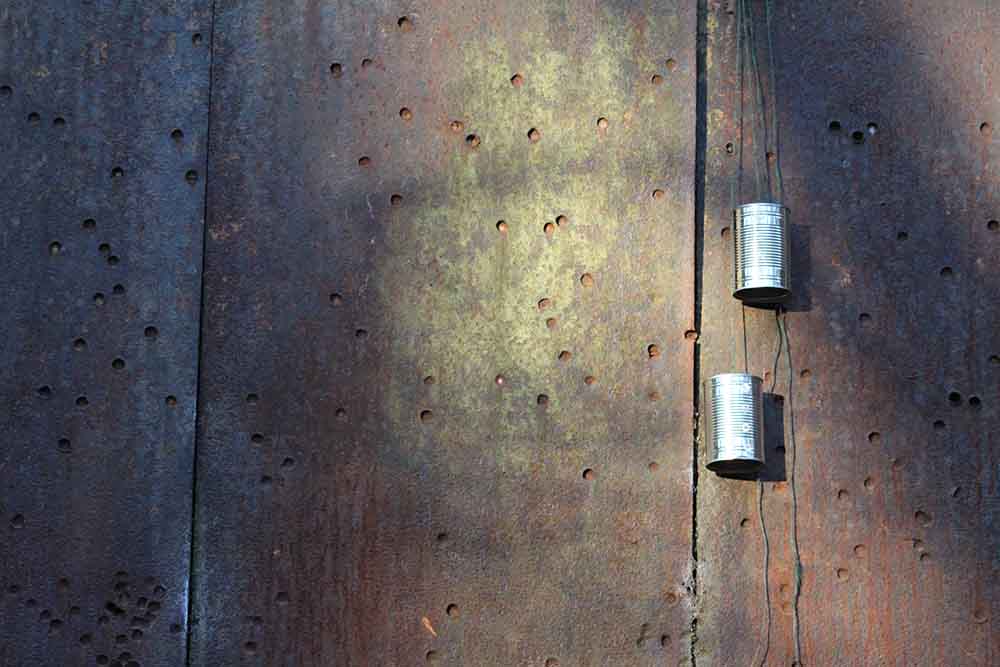
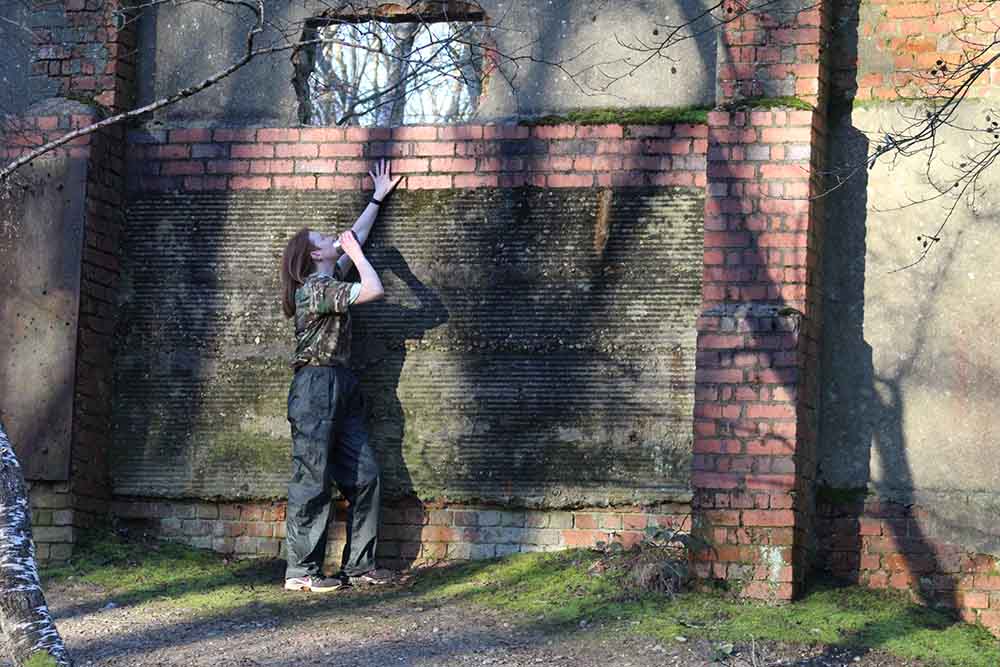
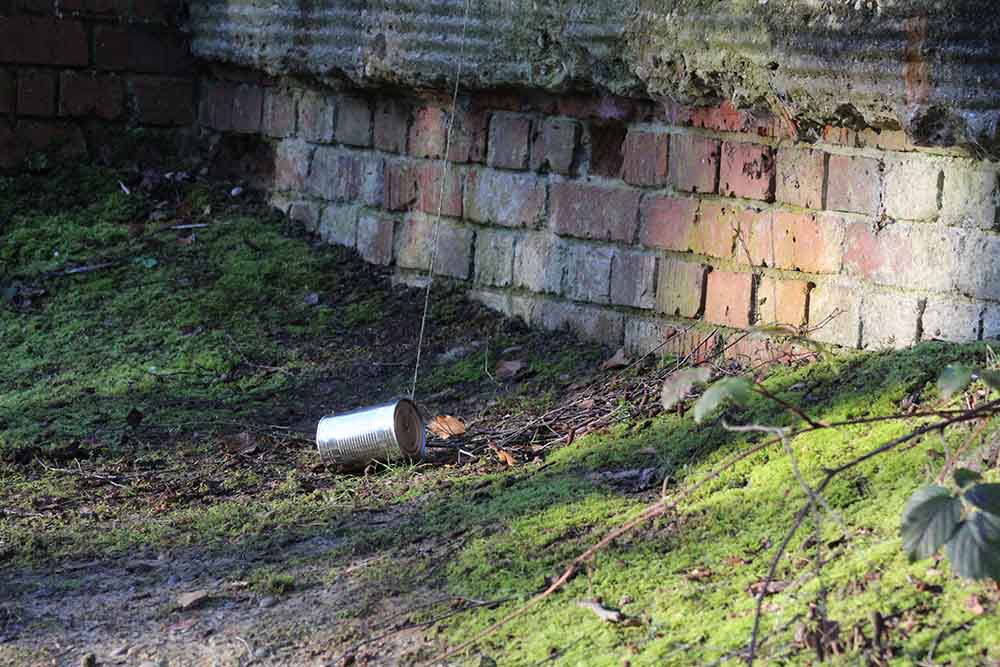
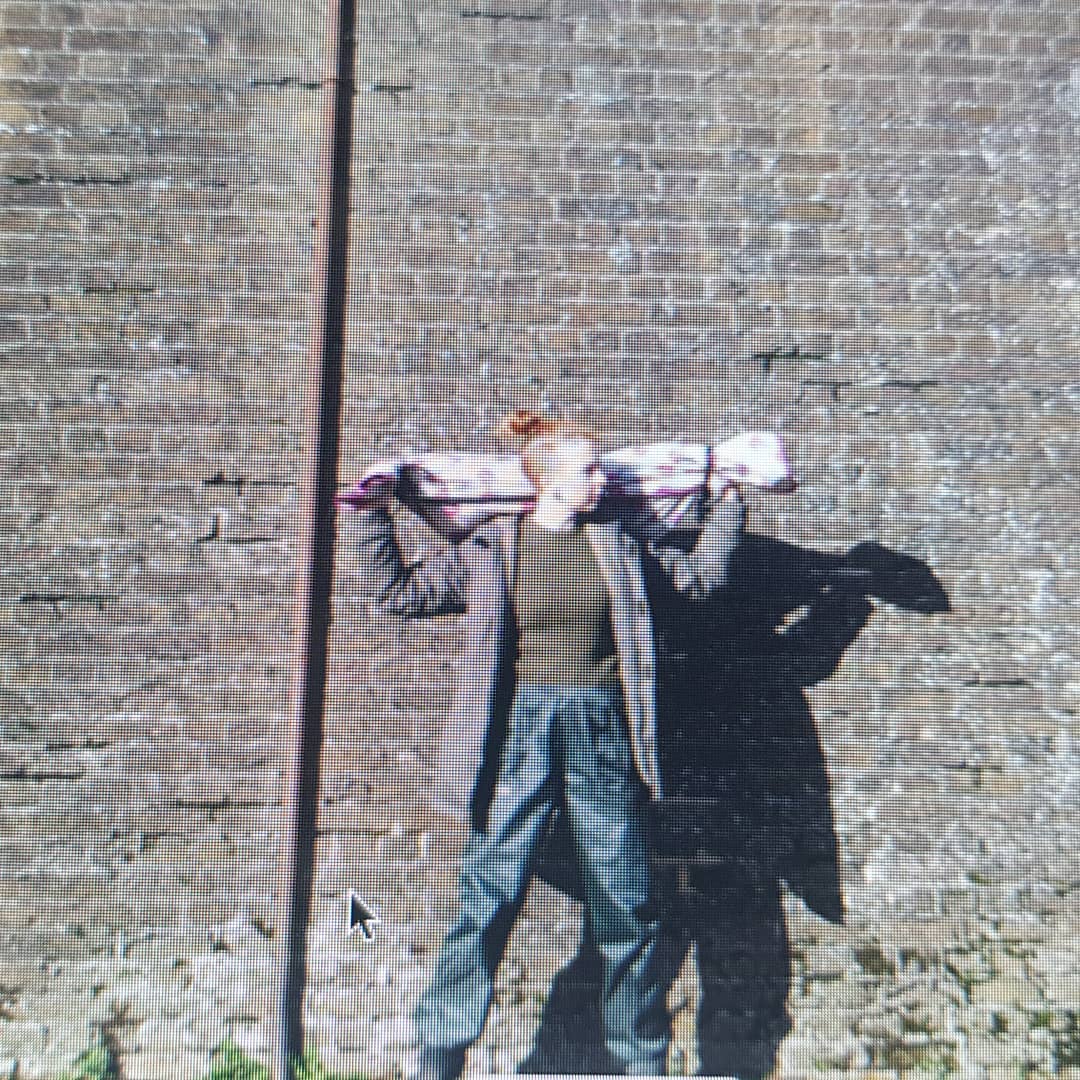
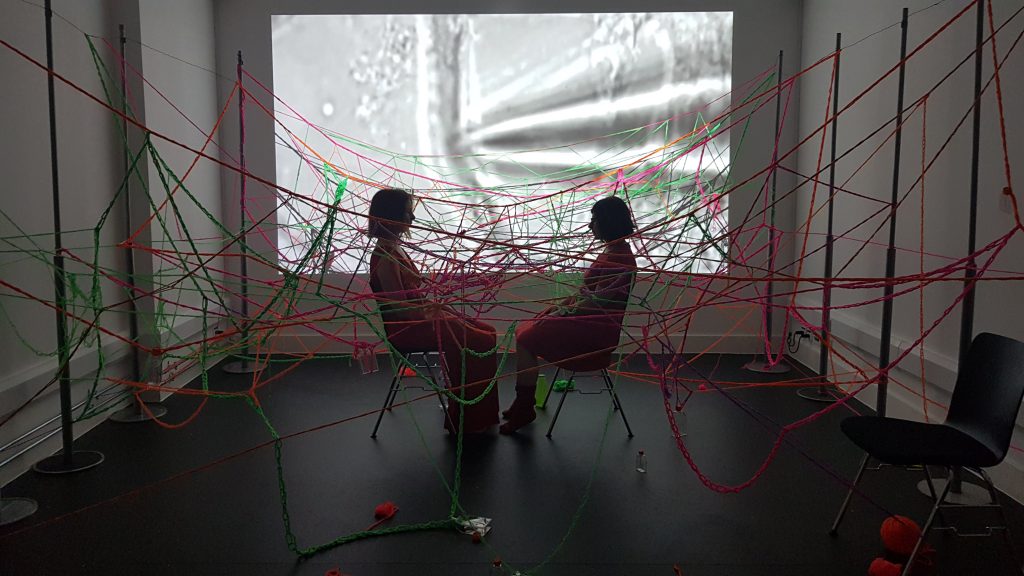
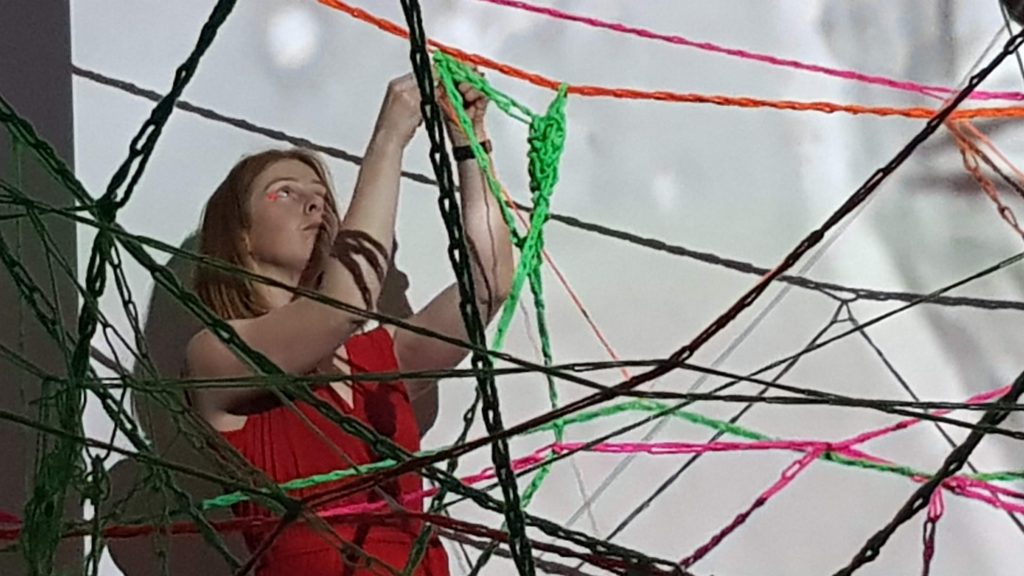
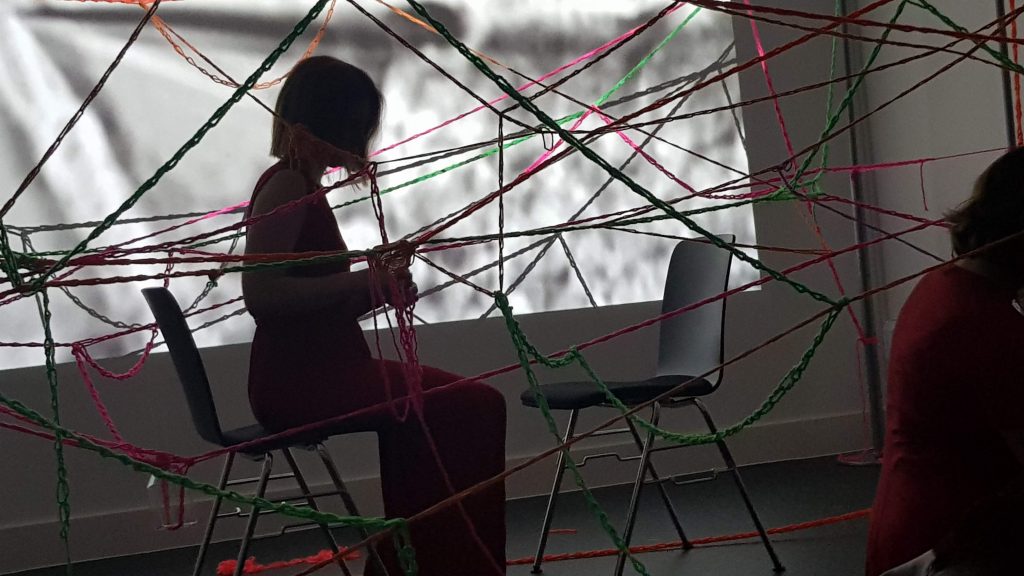
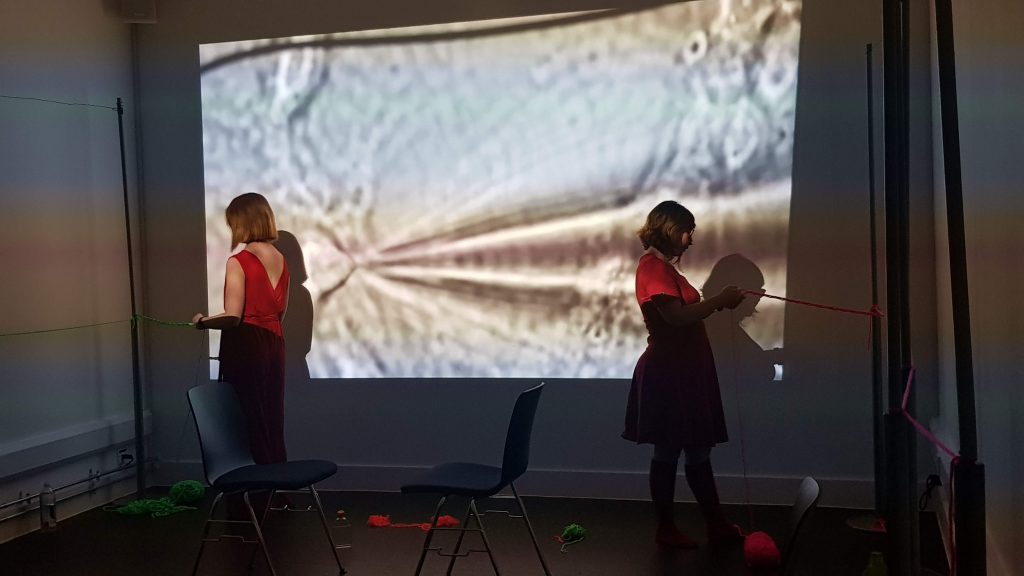
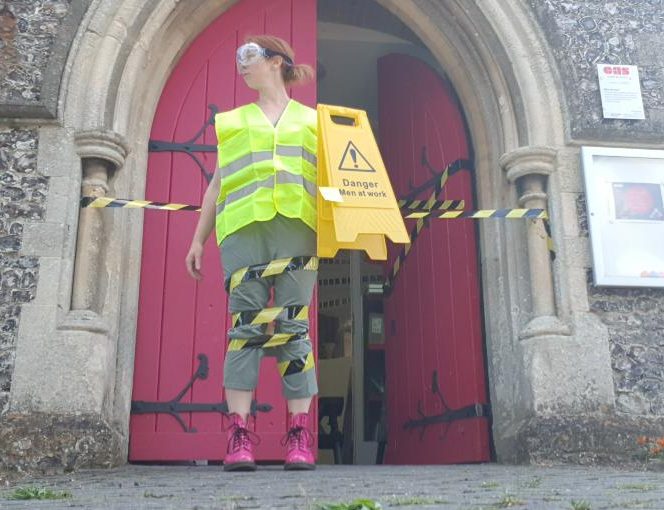
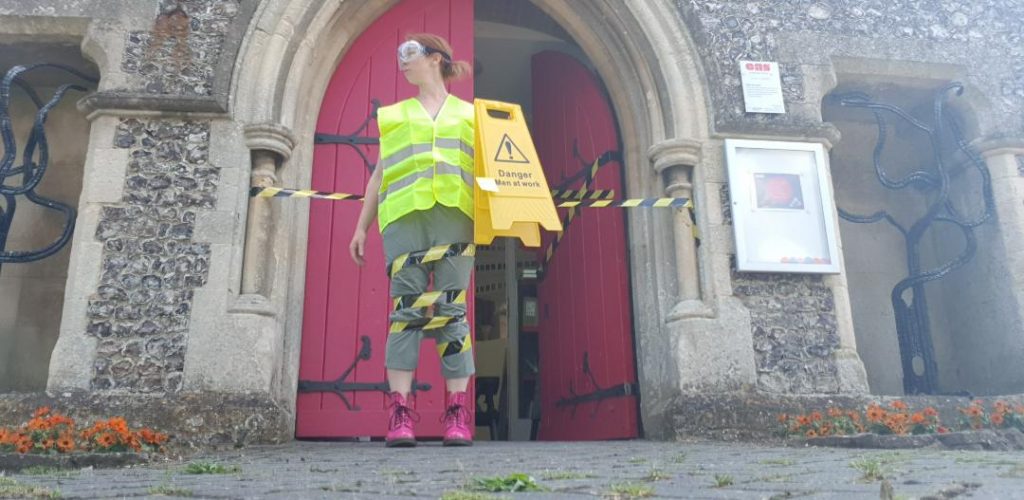
Conversations with the Shooting Wall, Susan Merrick, 2020 Conversations with the Shooting Wall, Susan Merrick, 2020Conversations with the Shooting Wall, Susan Merrick, 2020
This work forms part of a larger series of performative investigations in my home town of Aldershot, a military town in the South of England. The images are a response to the physical traces of the military that surround and saturate the town. These particular images formed part of a response also to a group exhibition ‘Saturated Space’ at the National Trust property, Sandham Memorial Chapel. The chapel houses a unique and original collection of murals/paintings by Stanley Spencer, who was commisioned to create the work in the chapel as a memorial to WW1.
I was particularly interested in the voices that could be invoked within the work, those who were in the paintings and those who were not. I took my tin can telephone to the old shooting walls from WW1 and WW2 that remain on the army land in Aldershot, and performed a series of listening activities at the wall – to camera. What voices would we hear? Which voices would be missing?
This is an ongoing project in my local town, Aldershot, taking the methodology from my previous work Statements in Semaphore and tailoring it to fit the needs and desires of local organisations, local audiences and local Artists.
Currently applying for funding!
The project will present a possible template for working in a socially engaged way within towns that have low arts participation. In my practice I am interested in how we as Artists consider the voices that we do not hear, the audiences that we do not attract, or that don’t feel invited into the conversation (as well as those who do). I am also interested in how we place our work, where we get our research and what ‘bubbles’ of reality we consider. Through workshops, and conversations spaces with groups of people in the community the project provides research spaces and discussion spaces for participants, Artists, organisations and audiences. Considering local issues and often ‘hidden’ issues, the collaboration will consider whether we can make hidden voices visible, and if so, how?
The work will be the conversations, the spaces created and the issues uncovered. But it will also take shape as a collaboration with the town and the residents.
This project will hopefully start Summer 2020 subject to funding, but the Artist will continue to build on her performative investigations (to camera) of the town running up to this point.
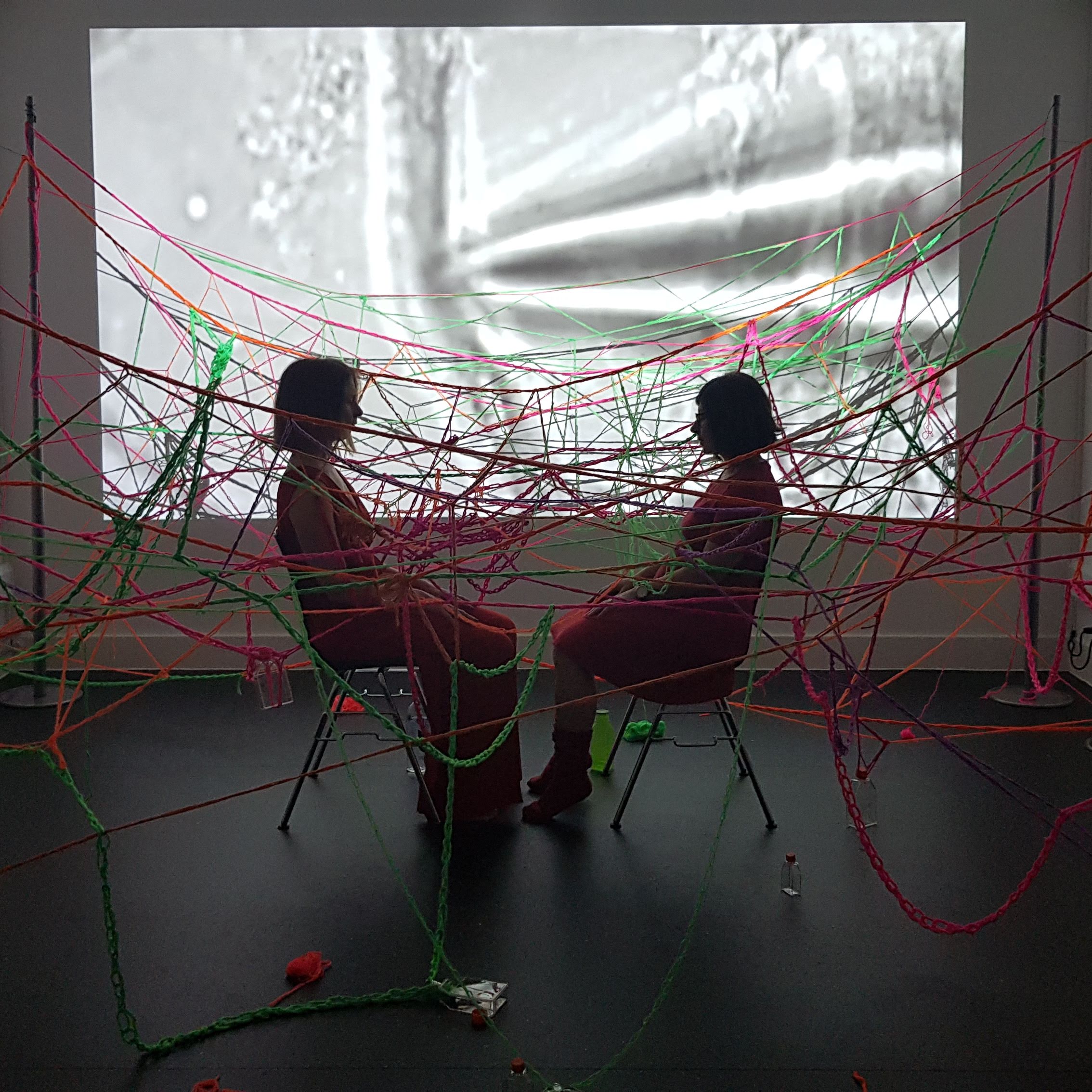
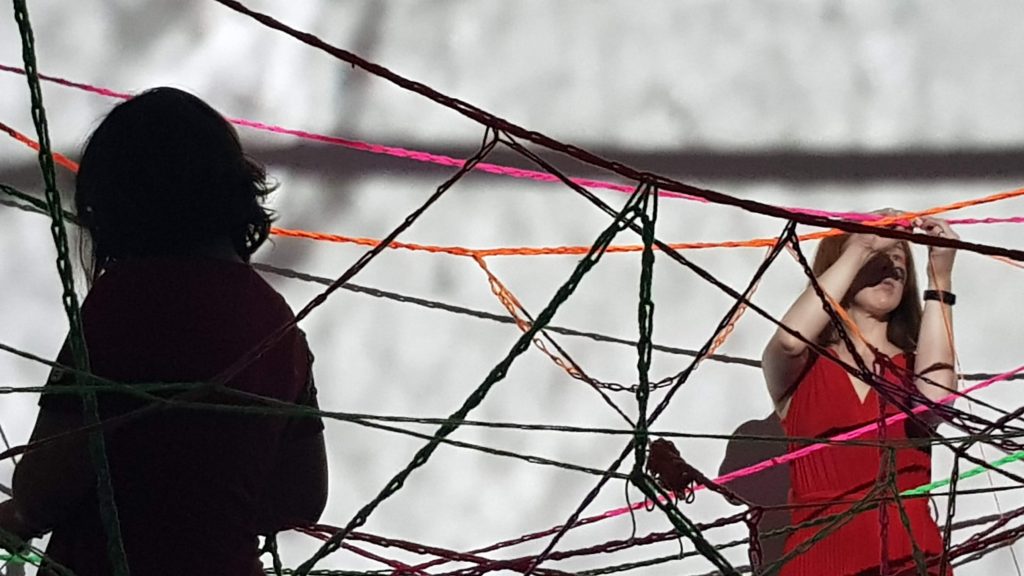
Across 2019/2020 I was invited by Barbara Touati-Evans to collaborate with her on her ACE funded project Detangling the Knots. The project combines research in Neuroscience labs with scientists at Southampton University alongside workshops in the community with people who have Dementia and their families. Using research and exploration of the recurrent themes within the project we are developing film and performance as our practice responses. The first of these performances ‘Touch Cells 1’ which we performed at the John Hansard Gallery in November 2019 was part of the Being Human festival, and was chosen for the ‘Best Creative Activity’ award of the festival. For more information and to see other performances and responses to the work visit the website page linked above.
During November and December 2019 I was invited to join a residency with CAS at Winchester School of Art. The residency was the second iteration of a project started in 2015 titled Laboratory of Dissent. CAS are based in what was originally an old dissenters chapel, a space for those who chose to ‘do things differently’, not follow the norm and agree with the status quo. CAS as a socially engaged and forward thinking arts organisation wanted to test out the idea of ‘dissent’ as a methodology, a space for developing practice. The blog for the residency can be found here: Laboratory of Dissent Blog
This residency was a chance to take it forward again and consider it with a new group of artists and organisers. With the working title ‘Inside/Outside’ a group of around 15 artists came together in various ways, online, face to face, via chat groups, through sharing spaces or tag teaming spaces. We began by sharing ideas around how we might see dissent as useful/limiting to each of us, and then opening the conversation up into the theme of inside/outside.
For my time in the residency I wanted to focus on the idea of safety. Our ‘bubbles’ of safty, our echo chambers of opinion. When these feel wonderful, when they feel limiting, when they feel safe or when they feel simply self perpetuating. The idea of saftey, inside/outside – who we project as ourselves and who we might be inside, who we speak to, who are our audiences, who do we not reach and why?
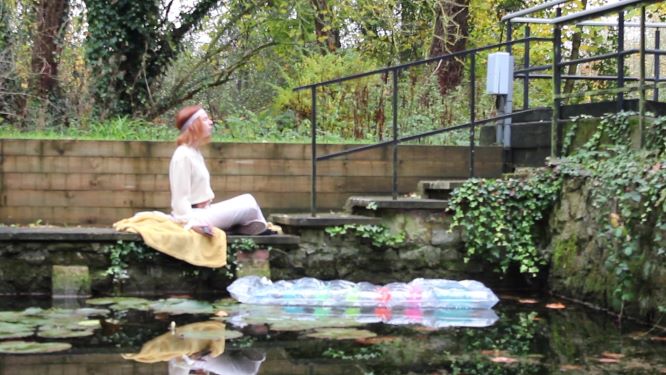
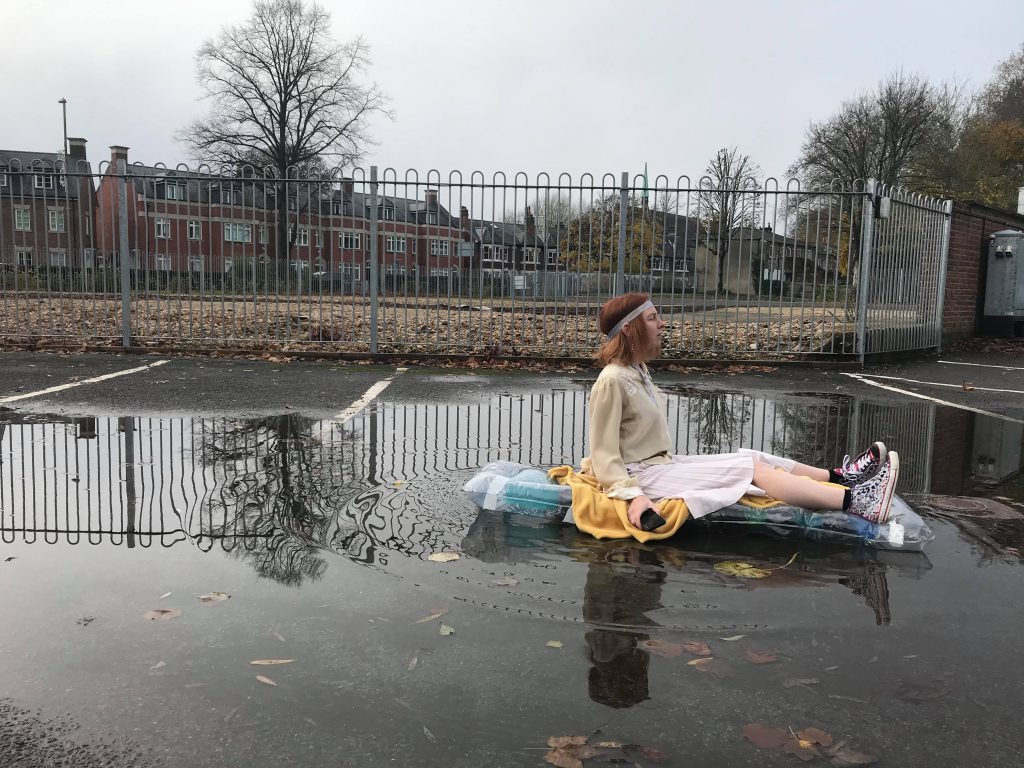
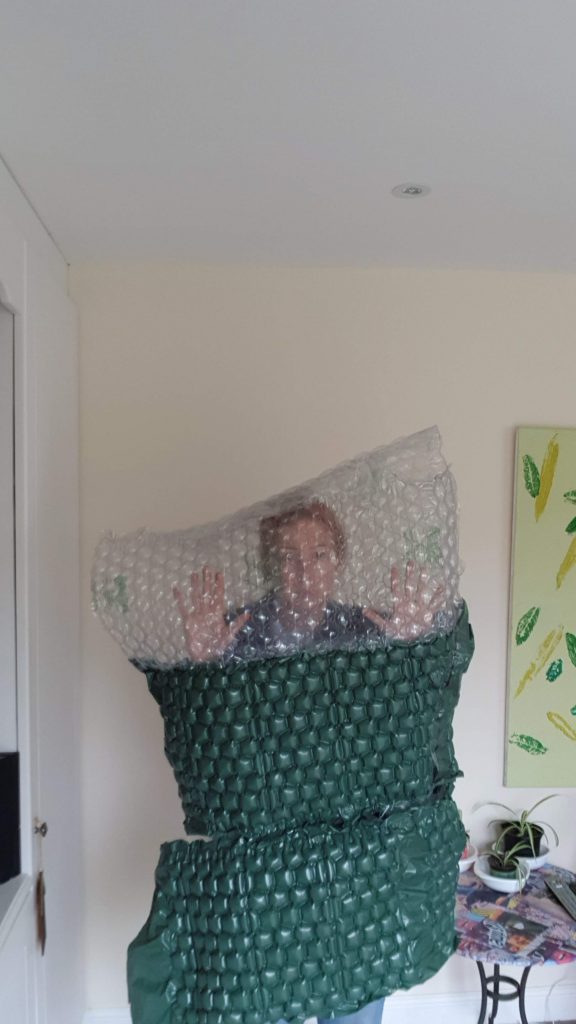
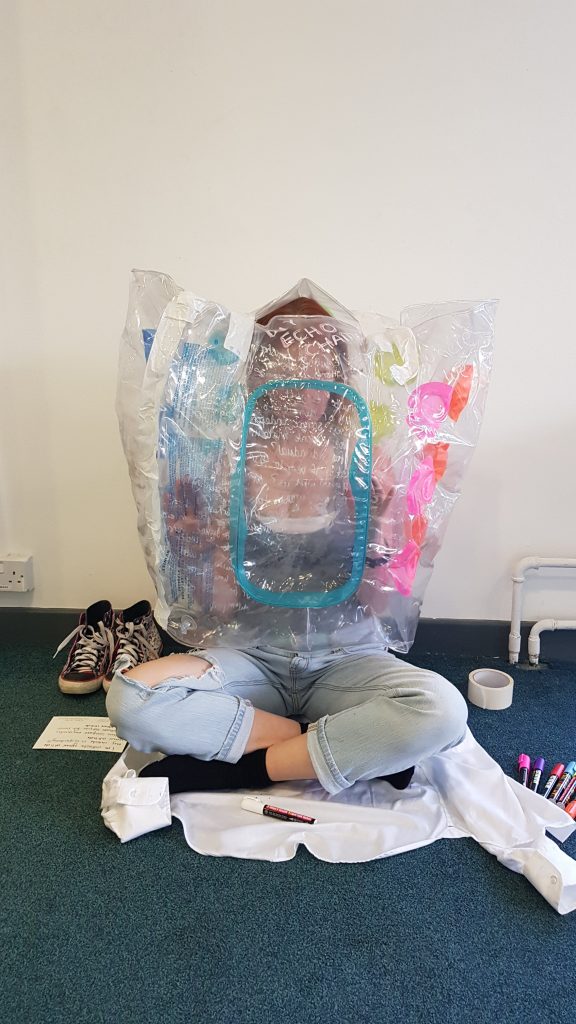
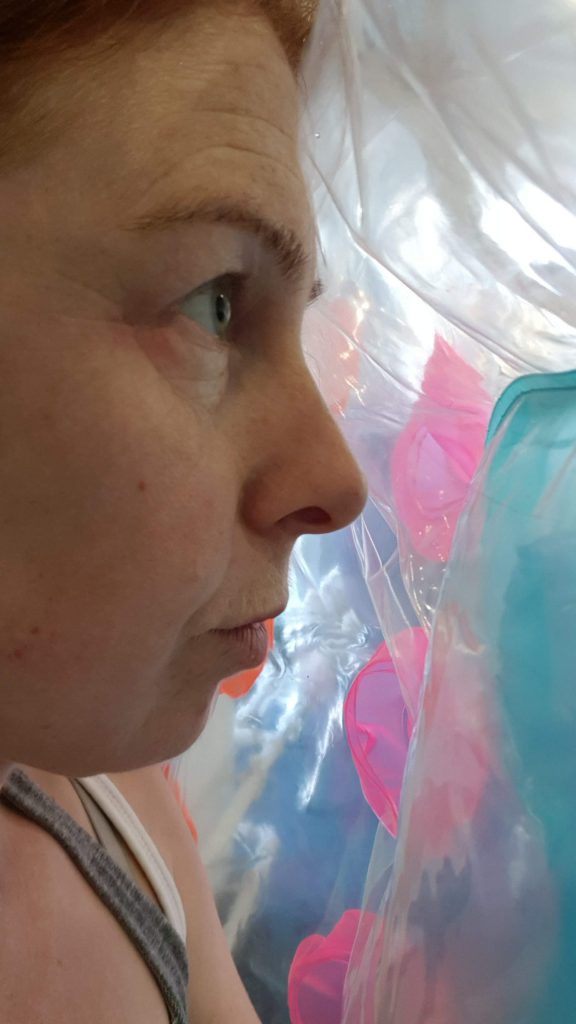
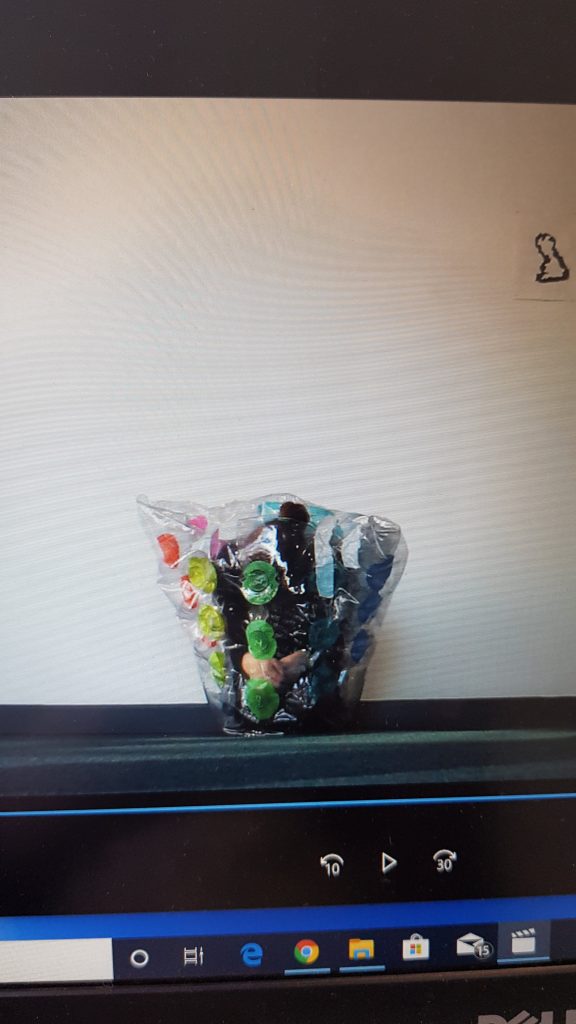
Bubble version 1 Bubble version 2 performance 1Bubble version 2 performance 1Bubble version 2 performance 2
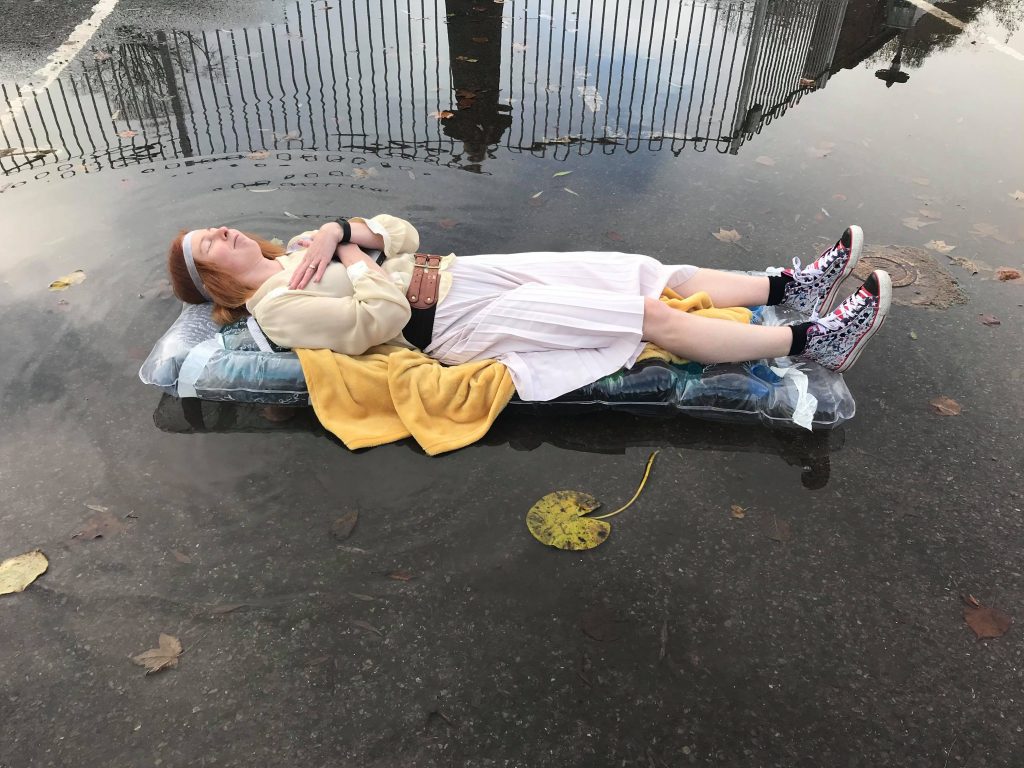
Through playful performance, photograph and film I considered literal and metaphoric bubbles (using bubble wrap and lilos), protective spaces, protective imagery, costume, clothing, safe exchanges, intimate exchanges, public exchanges. Exchanges with audiences or barriers to these, restrictions, exchanges with other artists and playfulness with this. I responded to Maija Leipins fairy tale explorations of text, self and dreams, I connected to her Rapunzel character with my own Lady of Shallot character. We shared discussions of fantasy alongside discussions of health and safety policies and risk assessments. I re purposed my Lilo bubble protective space as a boat, further referencing The Lady of Shallot and past imagery of Women, weakness and restriction. I added the use of water as my protective space, using a pond/moat at WSA and then a large puddle that had formed in the car park.
SAFE PLAY AREA is a new ongoing collaboration between Susan Merrick, Katherine Smith and Cherilyn Yeates.
We were all comissioned to join a summer residency with Chapel Arts Studios in Anodover (2019) with the theme of the SAFE PLAY AREA. We spent several months communicating and sharing images, ideas and thoughts around the theme, or own views and practice in relation to it. The culmination was a week in the studios (and within the town of Andover) to see what we would do.
We each have quite different practices/materials/process so it was an interesting mix, but one that worked so well we have decided to continue the project going into 2020.
Cherilyn uses mainly paint and visual art, murals and community based imagery. She set the scene for the space, creating vibrant arcade or soft play area like colours and shapes that merged with Katherines sculptures and my film work.
Katherine works mainly with soft sculpture but has more recently started using particpation in her work. Her ‘wheel challenge’ brought people in from the outside space, encouraged playfulness in the graveyard that surrounds the studios and created sculptures that invted audiences to tounch, bounce, spin and play.
My work is mainly digital or performative, but with a huge focus on interaction and social engagement. I became Andover’s Dream Safety Officer for the week, wanting to consider what ‘safe’ might mean, and how to make an audience feel ‘safe’ and ‘considered’ within our work. Using this idea I visited the town centre and collected peoples dreams, and they were able to choose a talismen (amusement arcade trinkets I’ve been gathering for a couple of years) in which to place the dream. These talismen were then used in a dream treasure hunt in the graveyard at the studio, where by I could share the dreams I had collected with the people who found them.
What came out of the week was an amazing context for some work that each of us had wanted to explore, but hadn’t had the time, space or context in which to do it. Our collaboration, shared input and playful way of working together created exactly what we needed to explore these areas more deeply. Creating a playful space we were able to welcome audiences, share work and develop performance and participatory work that can be taken into the local community but that also comes FROM the local community.